Fall Workshops
Unable to attend a workshop? Click here to request access to slides, screencasts, and other materials for Fall 2022 workshops.
| Title | Date & Time | Speakers | Details | Status |
|---|---|---|---|---|
| Text Analytics with MATLAB | 09/08/2022 1:00 PM–2:30 PM EDT |
Reece Teramoto | View Details | Open until 2:30 PM EDT 09/08/2022 |
| Carpentries: SQL Part 1 & Part 2 | 09/12/2022 09/19/2022 4:00 PM–5:30 PM EDT |
John Aedo | View Details | Open until 4:00 PM EDT 09/19/2022 |
| Foundations of Data Management Finding Data Sources Part One: An Introduction | 09/13/2022 3:00 PM–4:00 PM EDT |
Sarah Norris, Missy Murphey, and Rich Gause | View Details | Open until 3:00 PM EDT 09/13/2022 |
| High-performance computing using UCF Stokes and Newton computing clusters | 09/27/2022 3:00 PM–4:00 PM EDT |
Glenn Martin, Jamie Schnaitter | View Details | Open until 3:00 PM EDT 09/27/2022 |
| Leveraging AI for Signals and Time-Series Applications | 09/28/2022 1:00 PM–2:30 PM EDT |
Elvira Osuna-Highley, Ph.D | View Details | Open until 2:30 PM EDT 09/28/2022 |
| Introduction to Amazon SageMaker - An End-to-End Machine Learning Service | 10/10/2022 2:00 PM–5:00 PM EDT |
Gabriel Backman | View Details | Open until 8:00 AM EDT 10/07/2022 |
| Carpentries: Version control with Git | 10/11/2022 3:00 PM–5:00 PM EDT |
Mark Durbin | View Details | Open until 12:00 PM EDT 10/11/2022 |
| Amazon Comprehend for Natural Language Processing | 10/12/2022 2:00 PM–5:00 PM EDT |
Gabriel Backman | View Details | Open until 8:00 AM EDT 10/11/2022 |
| Amazon Rekognition for Computer Vision | 10/17/2022 2:00 PM–5:00 PM EDT |
Gabriel Backman | View Details | Open until 8:00 AM EDT 10/14/2022 |
| Foundations of Data Management Finding Data Sources Part Two: Subject Discipline Resources for the Social Sciences & STEM | 10/18/2022 3:00 PM–4:00 PM EDT |
Sarah Norris, Missy Murphey, and Rich Gause | View Details | Open until 3:00 PM EDT 10/18/2022 |
| Image Processing for Medical Applications | 10/20/2022 1:00 PM–2:30 PM EDT |
Esperanza Linares | View Details | Open until 2:30 PM EDT 10/20/2022 |
| Webinar – Cognitive assessment in the cloud: Approaches and lessons learned | 10/20/2022 12:00 PM–1:00 PM EDT |
Nelson Roque, Ph.D. | View Details | — |
| ORCID Workshop for Researchers | 10/25/2022 1:00 PM–2:00 PM EDT |
Sheila Rabun | View Details | — |
| Fifth Annual Fall UF HiPerGator Symposium 2022 | 11/01/2022 9:00 AM–1:00 PM EDT |
UF | View Details | — |
| Carpentries: Programming and Plotting with Python | 11/01/2022 11/03/2022 3:00 PM–5:00 PM EDT |
Fahad Khan | View Details | Open until 12:00 PM EDT 11/03/2022 |
Text Analytics with MATLAB
- Location
- Virtual
- Description
-
Text analytics is the process of uncovering hidden patterns from raw human language to enable better decision-making and predictions. With the explosion of text data generated by news, social media, as well as research papers, technical documents, internal reports, and maintenance logs, there is a significant amount of textual information available to us. Uncovering the relevant information manually from the large volume of text is challenging and often impossible by manual processing.
- Presenter
-
Reece Teramoto
Application Engineer at MathWorks
Leveraging AI for Signals and Time-Series Applications
- Location
- Virtual
- Description
-
Deep Learning is a key technology driving the current Artificial Intelligence (AI) megatrend. You may have heard of some mainstream applications of deep learning, but how many of them would you consider applying to your engineering and science applications?
MathWorks developers have purpose-built MATLAB's deep learning functionality for engineering and science workflows. We understand that success goes beyond just developing a deep learning model. Ultimately, models need to be incorporated into an entire system design workflow to deliver a product or a service to the market.
- Presenter
-
Elvira Osuna-Highley, Ph.D.
Principal Customer Success Engineer with MathWorks
Image Processing for Medical Applications
- Location
- Virtual
- Description
-
Today, there is a rich and sophisticated ecosystem for advanced image processing, ranging from complex computer vision techniques to AI/machine learning applications. MATLAB is a popular tool used by research and development engineers developing tomographic (MRI, CT, PT), ultrasound, intravascular, endoscopic imaging, and in-vitro diagnostic devices and technologies. It's used for various tasks, from analyzing, enhancing, and visualizing medical images to developing advanced imaging algorithms deployed on PCs, embedded systems, and the cloud.
Today's session explores the full spectrum of options between basic, pixel-level processing, and image preparation to be used on machine learning models in MATLAB for medical images.
- Presenter
-
Esperanza Linares
Customer Success Engineer at MathWorks
ORCID Workshop for Researchers webinar
- Location
- Virtual
- Description
-
In this session, we will cover an introduction to ORCID, the ORCID record, and how individual researchers can use ORCID to their advantage when working with research institutions, publishers, funders, and other organizations across the research and scholarly communication landscape.
View flier for full details
- Presenter
-
Sheila Rabun
Webinar – Cognitive assessment in the cloud: Approaches and lessons learned
- Location
- Virtual
- Description
-
Mobile and web-based applications on personal devices can serve as powerful tools to assess research participants and patient health. They can simultaneously improve patient experiences, lower barriers to participation, and deliver key data to analyze trends and enhance patient care through earlier intervention.
Join us to learn how Dr. Nelson Roque is using Amazon Web Services (AWS) to deliver mobile and web-based assessments to measure changes in patient cognition over time, and translating results into improved research and teaching outcomes. Dr. Roque will share challenges and lessons learned in developing research infrastructure on AWS.
- Presenter
-
Nelson Roque, Ph.D.
Foundations of Data Management Finding Data Sources Part One: An Introduction
- Location
- Teaching Academy Room 117 and Virtual
- Description
-
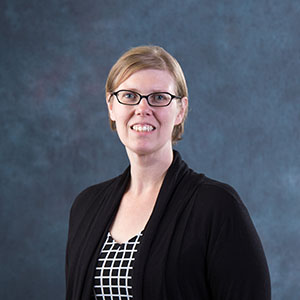
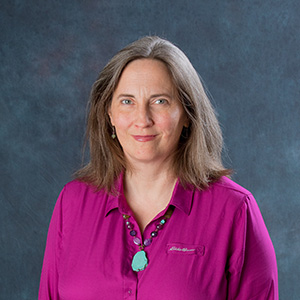
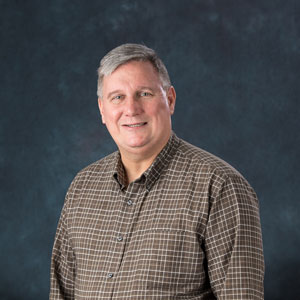
Data and statistics play an important role in conducting research, yet understanding how to find, analyze, and manage data can be complicated. If you are interested in developing data skills, the first of two workshops on finding data sources will provide an overview of introductory information to aid you on your path to being a data expert. The workshop will introduce the basic concepts of data and examples of how it is used in supporting research, including copyright concerns to be aware of. Additionally, information on UCF STARS, our institutional repository will be shared with a review of government related data resources.
- Presenter
Foundations of Data Management Finding Data Sources Part Two: Subject Discipline Resources for the Social Sciences & STEM
- Location
- Teaching Academy Room 303 and Virtual
- Description
-
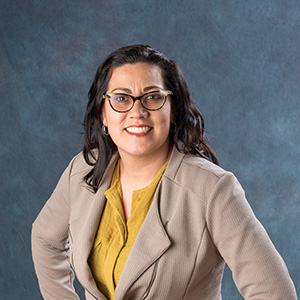
In the second workshop of the series on finding quality data, Government, Social Science, and STEM resources will be presented that are applicable in a variety of disciplines. Data source examples will also highlight open data sources, subscription-based sources available through the UCF Libraries, along with grey literature and preprint sources will be discussed.
- Presenter
Carpentries: SQL Part 1 & Part 2
- Location
- Research 1 Room 101 and Virtual
- Description
-
SQL (Structured Query Language) is used for data retrieval, searching, modification, and reporting by relational database systems. This workshop is an introductory level course aimed at researchers and students new to databases. You will learn how to explore data stored in databases like Microsoft Access, Microsoft SQL Server, mySQL, Oracle, and SQLite using SQL. You will gain hands-on experience querying, sorting, formatting, and transforming data. You also will be introduced to various tools such as the Python and R programming languages for accessing and querying databases.
- Presenter
High-performance computing using UCF Stokes and Newton computing clusters
- Location
- Research 1 Room 101 and Virtual
- Description
-
Computational research can analyze models and/or data to reach new conclusions in faster ways or more complex scenarios. UCF has a 4000+ core cluster for general-purpose computation for research across many fields of academic work. This workshop will review capabilities of the UCF Advanced Research Computing Center in general, with a focus on the general-purpose cluster (known as Stokes). Storage system usage, job scheduling and account balancing, and job submission will be covered with an interactive hands-on session (if an attendee does not yet have an ARCC account, please be sure to request an account ahead of time via the ARCC web site at arcc.ist.ucf.edu).
- Presenter
Carpentries: Programming and Plotting with Python
- Location
- Research 1 Room 101 and Virtual
- Description
-
This is an introduction to programming in Python for people with little or no previous programming experience. It uses plotting as its motivating example. This lesson references JupyterLab, but can also be followed using a regular Python interpreter as well. This lesson uses Python 3.
Please note, this workshop is being presented in two parts, with half of the course material being presented on November 1, and the second half being presented on November 3.
- Presenter
Carpentries: Version control with Git
- Location
- Research 1 Room 101 and Virtual
- Description
-
An introduction to version control for researchers using Git. In this workshop, participants will learn how to stop worrying and easily track changes to their files and code. Effortlessly revert between versions with simple commands. Collaborate with colleagues seamlessly using a centralized file repository. Learn how multiple people can work on the same file and easily work through the revision conflicts.
- Presenter
Introduction to Amazon SageMaker - An End-to-End Machine Learning Service
- Location
- Research 1 Room 101 and Virtual
- Description
-
Learn how to use Amazon SageMaker Studio, the first integrated development environment (IDE) for machine learning. Amazon SageMaker brings together a broad set of purpose-built tools covering the entire machine learning lifecycle. Developers can write code, track experiments, visualize data, and perform debugging and monitoring all within a single, integrated visual interface. This is a hands-on workshop and a dedicated AWS account will be provided for the lab exercises.
- Presenter
-
Gabriel Backman
Solutions Architect, Amazon Web Services
Amazon Comprehend for Natural Language Processing
- Location
- Research 1 Room 101 and Virtual
- Description
-
Learn how to use Amazon Comprehend to derive and understand valuable insights from text within documents. Amazon Comprehend is a natural-language processing (NLP) service that uses machine learning to uncover information in unstructured data and text. In this workshop, you will learn how to use Amazon Comprehend to perform sentiment analysis, syntax analysis, detect entities, extract key phrases, detect personal information, and train the service to use custom classifiers. This is a hands-on workshop and a dedicated AWS account will be provided for the lab exercises.
- Presenter
-
Gabriel Backman
Solutions Architect, Amazon Web Services
Amazon Rekognition for Computer Vision
- Location
- Research 1 Room 101 and Virtual
- Description
-
Learn how to automate image and video analysis with machine learning using Amazon Rekognition. Amazon Rekognition makes it easy to integrate image and video analysis into your applications using proven, highly scalable, deep learning technology with no machine learning expertise needed. In this workshop, you will learn how to use the built-in object detection and train Amazon Rekognition to detect custom objects in images. This is a hands-on workshop and a dedicated AWS account will be provided for the lab exercises.
- Presenter
-
Gabriel Backman
Solutions Architect, Amazon Web Services
XSEDE HPC Workshop: Big Data and Machine Learning
- Location
- Virtual
- Description
-
XSEDE, along with the Pittsburgh Supercomputing Center, is pleased to present a two day Big Data and Machine Learning workshop. This workshop will focus on topics including big data analytics and machine learning with Spark, and deep learning using Tensorflow.
Due to COVID-19, this workshop will be remote, using Zoom.
Registration for this event ends at Noon on Friday, August 26.
For more information, visit: https://www.psc.edu/resources/training/xsede-hpc-workshop-big-data-august-2022/
- Presenter
Fifth Annual Fall UF HiPerGator Symposium 2022
- Location
- Virtual
- Description
-
The Fall Symposium focuses on high-performance and high-throughput computing, leveraging HiPerGator 3.0 and its storage systems. The symposium is open to everyone in the UF community and to research faculty in the State University System and Southeastern Conference member institutions.
- Presenter